Bull Icon: The Brown Farm Animal Cattle Symbol
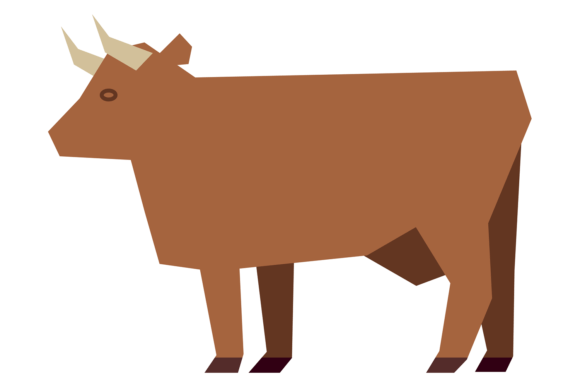
When you need a symbol that communicates raw power, stability, or agricultural heritage, the Bull Icon is a design asset that delivers immediate impact. This specific set features a Brown Farm Animal Cattle Symbol, a versatile graphic resource available in industry-standard formats including EPS, JPG, SVG, and transparent PNG. Unlike complex illustrations that can clutter a design, this icon relies on strong, recognizable silhouettes and warm, earthy tones to tell a story. For designers, marketers, and entrepreneurs, this icon is not just a picture of an animal; it is a strategic tool for conveying specific brand attributes without saying a word.
Visual Characteristics and Design Appeal
The core appeal of this asset lies in its isolation and clarity. The design presents the bull in a profile view, capturing the muscular definition of the shoulders and the curve of the horns. Because it is isolated on a white background, it functions perfectly as a transparent PNG or SVG, allowing you to drop it onto any color palette or photographic background without worrying about awkward clipping masks or white boxes.
The color palette is grounded in reality, utilizing browns and earth tones that evoke the texture of soil, leather, and natural fiber. This makes the Bull Icon feel authentic rather than cartoonish. It strikes a balance between illustration and symbolism. It possesses a distinct personality—stoic, rugged, and traditional. Whether you are working on a rustic brand identity or a modern agricultural startup, the style of this cattle symbol provides a solid foundation. It serves as a bridge between traditional graphic design and modern minimalism, offering enough detail to be interesting but not so much that it becomes noise.
Strategic Applications for Branding and Marketing
Understanding where to deploy the Bull Icon is key to maximizing its value. For logo design, this symbol is a natural fit for industries related to agriculture, beef production, leather goods, or financial services where "bullish" market behavior is a positive trait. However, its utility extends far beyond these obvious categories.
- Editorial and Publishing: In magazine layouts or blog headers, this icon can serve as a powerful visual anchor. It breaks up text-heavy pages and provides a visual cue for articles about rural life, strength, or economic trends.
- Packaging Design: For craft breweries, BBQ sauces, or artisanal jerky brands, the brown farm animal symbol adds an immediate layer of authenticity. It suggests a product that is handmade, robust, and full of flavor.
- Digital and Web Design: On websites, the SVG format ensures the icon scales perfectly on retina displays without pixelation. It works well in "About Us" sections to represent team values or as a favicon for a memorable browser tab presence.
- Social Media Graphics: A striking icon creates high engagement. Use the bull to represent a specific content series, such as "Tip Tuesday" or "Strength in Business," creating a consistent visual thread across platforms like Instagram and LinkedIn.
Influence on Brand Perception and Hierarchy
The assets you choose send subconscious signals to your audience. Using the Bull Icon influences brand perception by associating your business with durability and determination. In visual hierarchy, a strong symbol can act as a focal point that guides the viewer's eye from the image to the headline and finally to the call to action.
Consistency is vital in building recognition. By using this specific cattle symbol across your marketing materials—from business cards to social media headers—you reinforce your brand identity. It helps create a cohesive look that feels professional and intentional. When a customer sees that icon, they should immediately recall your brand's promise. This is the power of a well-chosen design asset; it works silently in the background to build trust and familiarity.
Practical Guidance for Designers and Creators
Integrating a new asset into a workflow requires a practical approach. Here is how to evaluate and use the Bull Icon effectively in your projects.
Evaluating Project Fit and Style
Before downloading, assess the visual style of the icon against your current project. Does the illustration style match your existing typography? If you are using a sleek, geometric sans serif font, the rustic nature of the bull might create an interesting contrast, or it might clash. If you are using a script font or handwritten font, the organic shapes of the animal will likely harmonize well. The goal is to ensure the icon feels like a native part of the design, not an afterthought.
Technical Implementation and Formats
The inclusion of EPS, JPG, SVG, and transparent PNG files covers almost every use case.
- SVG (Scalable Vector Graphics): Use this for web design and UI. It keeps file sizes small and allows you to change the color code via CSS if needed.
- EPS (Encapsulated PostScript): This is the go-to for print. If you are sending files to a printer for packaging design or merchandise, EPS ensures the lines remain crisp at any size.
- Transparent PNG: Best for quick mockups, presentations, or drag-and-drop usage in tools like Canva or Photoshop where you need the background removed instantly.
- JPG: Useful for mood boards or contexts where transparency isn't needed and file compatibility is the priority.
Testing and Pairing
Do not just place the icon and walk away. Test it. View it on mobile devices to ensure the horns and tail don't get lost in small sizes. Look at the negative space. When pairing this icon with text, consider the weight. A heavy, bold bull icon pairs well with a sturdy, bold serif font or a thick sans serif font. Avoid pairing it with ultra-thin, delicate typefaces, as the visual weight will be unbalanced.
Conclusion
The Bull Icon featuring a Brown Farm Animal Cattle Symbol is more than just a clipart image. It is a versatile piece of modern typography